Authorization Letter and Amazon Non-Enforcement of Exclusive Distribution Policy
An authority letter from a manufacturer or distributor for a company is often required for several reasons:
1. Verification of Business Authenticity
An Authority Letter assists in verifying that the company claiming to represent, distribute, sell, or deal in a particular brand or manufacturer’s products has a genuine commercial relationship with the issuing entity.
For business verification, the parties may also exchange relevant statutory and commercial documents, such as:
- Certificate of Incorporation / Registration documents, where applicable
- PAN
- GSTIN and GST registration details, where applicable
- FSSAI licence/registration for applicable food businesses
- Importer-Exporter Code (IEC), where applicable
- Brand ownership or authorization documents, where applicable
- Distributor/dealer appointment documents
- Purchase invoices and applicable supply-chain documentation
The Authority Letter itself should not be treated as a substitute for any statutory licence, registration, approval, or certificate required under applicable Indian law.
2. Authorization to Deal in Products
The letter should clearly specify the authority granted by the manufacturer, brand owner, or authorized distributor.
Depending upon the commercial arrangement, the authorization may cover activities such as:
- Purchase of products from the manufacturer/distributor
- Wholesale or retail sale
- E-commerce and marketplace sales
- Quick-commerce sales
- Distribution and supply
- Marketing and promotional activities
- Product listing on online platforms
- Customer support or after-sales services, where applicable
- Use of approved product information, trademarks, images, and marketing material, subject to the rights granted by the brand owner
The authorization should clearly identify the brand, product category, territory, sales channels, and validity period, wherever applicable.
3. Compliance and Accountability
The authorized company shall conduct its business in accordance with applicable Indian laws, regulations, contractual obligations, and the policies communicated by the manufacturer, brand owner, or authorized distributor.
Depending on the nature of the products and business, applicable requirements may include:
- Goods and Services Tax (GST) laws
- Income-tax laws
- Legal Metrology requirements, where applicable
- Consumer Protection Act, 2019
- Consumer Protection (E-Commerce) Rules, 2020, where applicable
- Food Safety and Standards Act, 2006 and applicable FSSAI regulations for food products
- Drugs and Cosmetics laws for applicable products
- Trademarks Act, 1999
- Copyright Act, 1957
- Competition and advertising requirements, where applicable
- Applicable packaging, labelling, invoicing, and product-specific regulatory requirements
The authorized company should not make representations beyond the authority expressly granted by the issuing entity.
4. Trust, Credibility and Supply-Chain Transparency
An Authority Letter provides documentary support for the commercial relationship between the issuing entity and the authorized company.
It may assist customers, marketplaces, business partners, auditors, financial institutions, and other relevant stakeholders in establishing:
- The identity of the parties
- The existence of a commercial relationship
- The products covered by the authorization
- The permitted business activities
- The territory or sales channels covered
- The validity of the authorization
- The applicable terms and conditions
Where required, the recipient may independently verify the Authority Letter with the issuing manufacturer, brand owner, or distributor.
Common Business Situations Requiring an Authority Letter
1. Business Partnerships and Vendor Onboarding
An Authority Letter may be requested during vendor onboarding, distribution arrangements, strategic partnerships, or commercial collaborations to establish that the company is authorized to deal with the relevant products or brand.
2. E-Commerce and Marketplace Operations
For online sales, marketplaces or other business partners may request documentation establishing the seller’s or distributor’s relationship with the brand owner or authorized supply chain.
The authorization should specifically mention online/e-commerce sales where such authorization is intended to be granted.
3. Tenders and Bidding
In government, institutional, or private-sector tenders, an authorization letter may be required where the tender conditions specify that a bidder must submit authorization from the manufacturer or principal.
The letter should comply with the specific tender’s eligibility and documentation requirements.
4. Regulatory and Commercial Verification
An Authority Letter may be used as supporting documentation during commercial due diligence, compliance verification, audits, or onboarding procedures.
However, where a statutory licence, registration, certificate, or approval is mandatory, the relevant statutory document must be obtained separately.
5. Warranty and After-Sales Support
Where a company is authorized to provide warranty, repair, installation, replacement, or after-sales services, the manufacturer or principal should expressly state the scope of such authority in the letter.
Essential Contents of an Authority Letter
A professionally drafted Authority Letter should generally contain the following information:
A. Issuing Entity Details
- Legal name of manufacturer / brand owner / distributor
- Registered office address
- GSTIN, where applicable
- PAN, where appropriate
- Contact details
- Name and designation of the authorized signatory
B. Authorized Company Details
- Legal name of the authorized company
- Registered/business address
- GSTIN, where applicable
- PAN, where appropriate
- Contact details
- Name and designation of the relevant representative
C. Scope of Authorization
The letter should clearly state:
- Brand name
- Product categories/SKUs covered
- Nature of authorization
- Territory
- Sales channels
- E-commerce/marketplace authorization, if applicable
- Distribution or resale rights, if applicable
- Marketing rights, if applicable
- Warranty/service rights, if applicable
D. Validity
The Authority Letter should mention:
- Effective date
- Expiry date, if applicable
- Conditions for renewal
- Circumstances under which the authorization may be withdrawn or terminated
E. Terms and Conditions
The letter may specify conditions concerning:
- Pricing and commercial terms
- Minimum purchase requirements, if any
- Brand and trademark usage
- Product representation and advertising
- Confidentiality
- Product storage and handling
- Compliance with applicable laws
- Territory restrictions
- Online/offline sales restrictions
- Termination of authorization
F. Signature and Verification
The document should be signed by an authorized representative of the issuing entity and should preferably include:
- Name
- Designation
- Signature
- Company seal/stamp, where used
- Official contact details
- Date and place of issuance
Amazon Non-Enforcement of Exclusive Distribution Policy
1. What This Policy Means
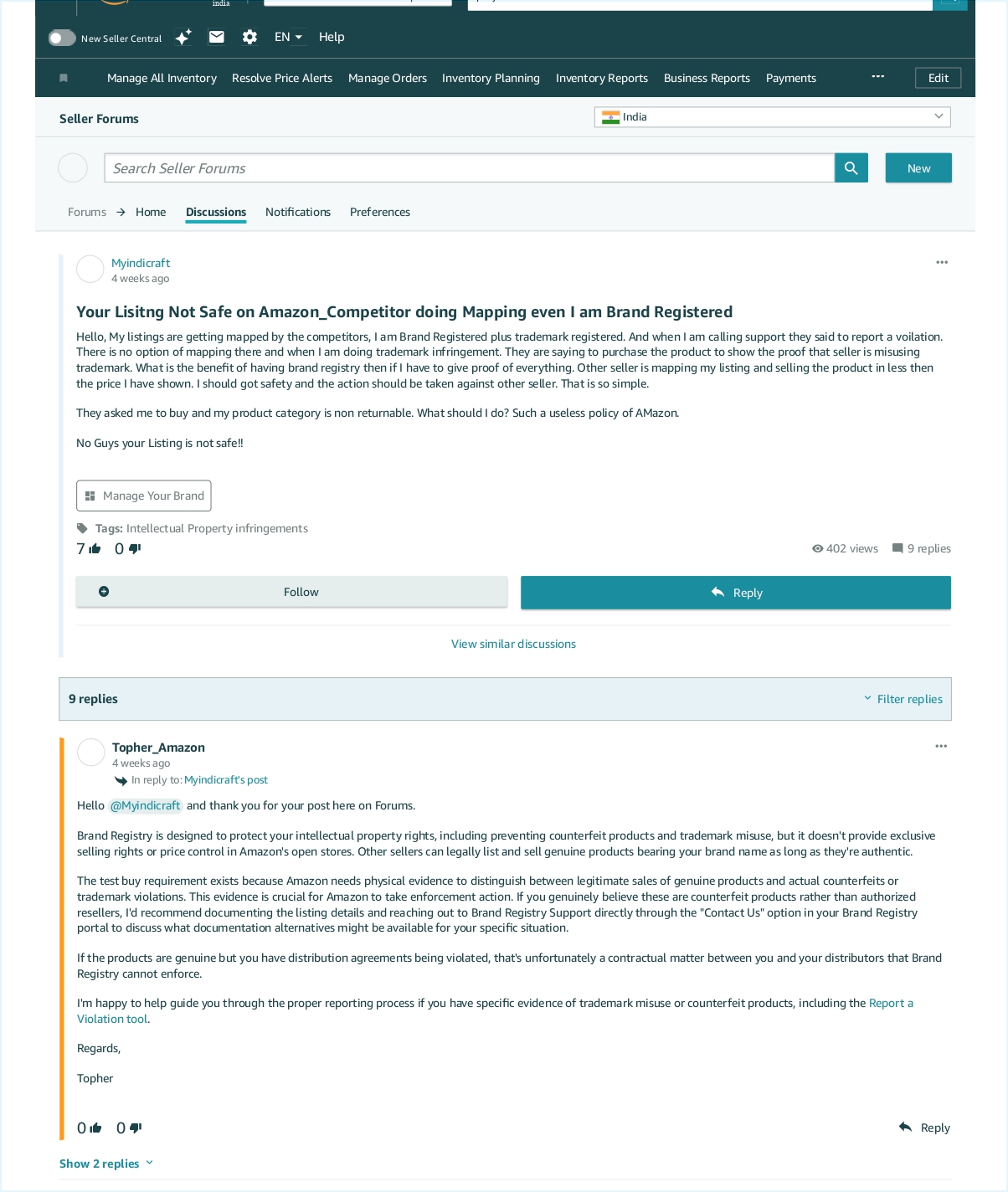
Amazon operates an open marketplace. This means Amazon does NOT enforce or honor exclusive distribution agreements between brands, distributors, wholesalers, or sellers. Even if a brand grants “exclusive online selling rights,” Amazon will not block other sellers from selling the same genuine product.
2. Why Amazon Does Not Enforce Exclusivity
– Marketplace neutrality: Amazon cannot regulate commercial contracts between private parties.
– Competition law compliance: Enforcing exclusivity may violate anti‑competition principles.
– Brand responsibility: Brands—not Amazon—must implement tools to control online selling.
3. What Amazon Will Enforce
Amazon enforces:
– Counterfeit product violations
– Trademark and copyright infringement
– Chain-of-invoice authenticity
– Safety and compliance requirements
– Listing accuracy and genuineness
It does NOT enforce exclusive distribution agreements.
4. Who Can Legally Sell on Amazon
Any seller with:
– A valid GST invoice
– Genuine product
– Compliance with Amazon policies
…can sell legally on Amazon, even if exclusivity agreements exist offline.
5. How Brands Can Control Sellers
Brands can enforce online control through:
A. Amazon Brand Registry – listing ownership, content control, IP protection
B. Transparency Program – unique QR codes blocking unauthorized sellers
C. Brand Gating – Amazon restricts ASIN to pre‑approved sellers
D. GS1 Barcodes & controlled supply chain
6. Impact on Distributors / Sellers
Offline exclusive distributor appointments do NOT translate to online exclusivity. Online control requires brand action using Amazon tools.
7. Seller Protection Tips
– Obtain authorized seller letter
– Maintain complete chain of invoices
– Sell only genuine, compliant products
– Create bundles or exclusive SKUs
– Encourage brand to join Brand Registry & Transparency
8. Summary
Amazon does NOT enforce exclusive distributor agreements. Only genuine products, GST invoices, and Amazon policy compliance matter. Online exclusivity is controlled by the BRAND, not Amazon.